Nina Statler, The University of California – Santa Barbara
Abstract
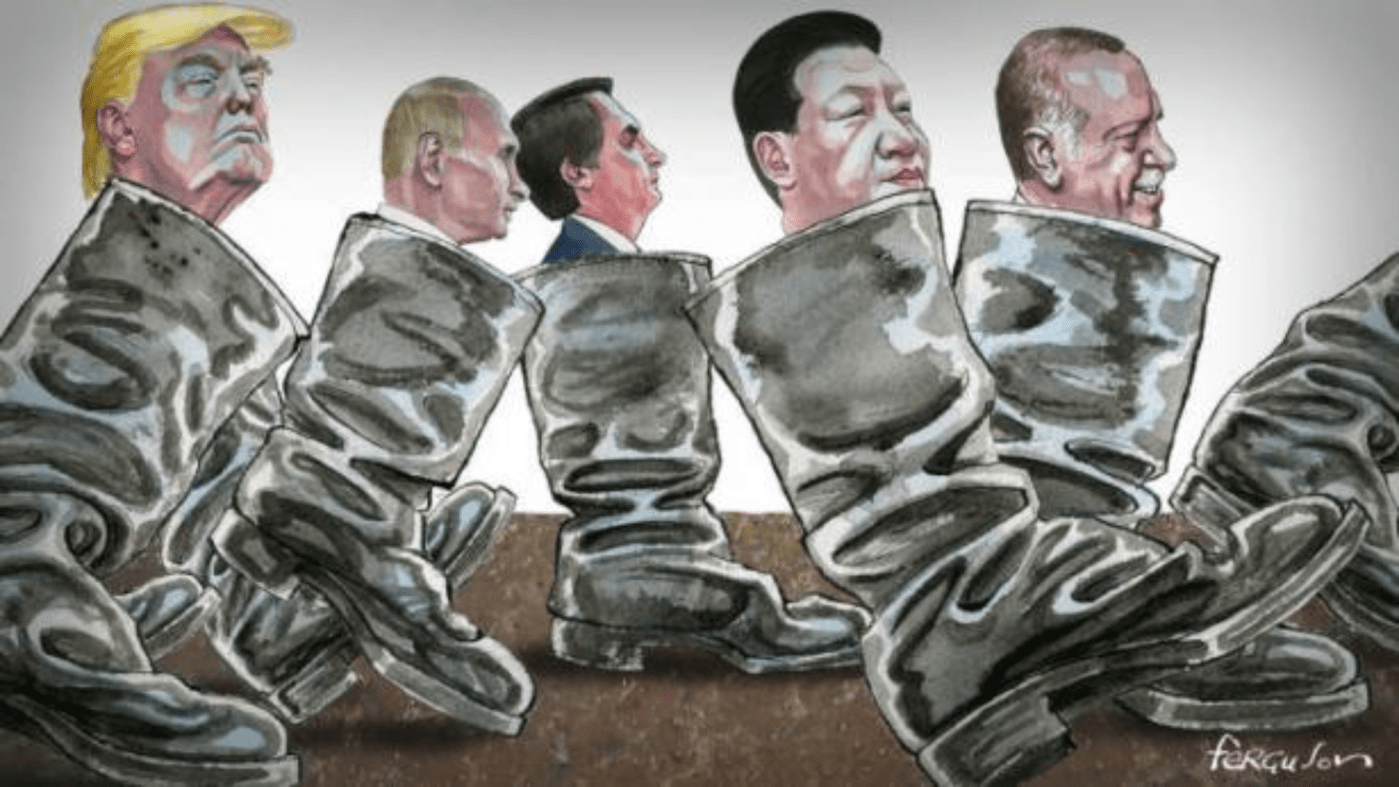
The Western world is undergoing a profound ideological shift, one that transcends national borders, oceans, and even generations. Across every continent, there has been an unprecedented rise in authoritarianism that is paradoxically being embraced through democratic processes. At the turn of the 21st century, the world seemed to be becoming increasingly liberal, progressive, and democratic. Nearly half of the global population lived under democratic institutions, and a globally connected network facilitated an ever-expanding flow of ideas. However, global democratization in recent years has been surprisingly incongruous with public sentiment and behavior. People living in democracies have become increasingly unhappy, unequal, and resentful toward the very systems that govern them. Some feel that the liberal ideals which once shaped Western democratic systems no longer represent them, believing that individual choice and freedom have morphed into excessive displays of progressive activism, where opposition or questioning risks social ostracization. Further, many feel that globalization has fueled economic inequality in Western democracies, leaving large portions of the population resentful and at odds with a status quo that places heavy emphasis on global interconnectedness and democratization. Unsurprisingly, those who feel that their rights to freely express opinions are being restricted are more likely to express dissatisfaction with democracy. The question remains: How did the global West, once a model for liberalism, democracy, and progressivism, come to seek a return to traditionalism and authoritarian leadership?
Keywords: Authoritarianism, Collective Shadow, Disillusionment, Illiberalism, Individuality, Industrialization, Projection
I. Introduction
The liberal, progressive, and democratic triumphs at the turn of the 21st century were once seen as major victories. The end of the Cold War, the spread of democratic values, and the expansion of free markets were indicators of an increasingly interconnected world. Simultaneously, the technological advancements of the 20th century produced efficient methods of production and economic growth, and the subsequent proliferation of free trade made it difficult for non-democratic institutions to engage with the global economy. Researchers Josef Brada and Jehoon Park examined the role of economic prosperity in building a supportive public body during the 19th century American Industrial Revolution, stating that “greater popular trust in government capacity resulted in part from the introduction of policies to spur industrialization, to promote the spread of railroads, and to support improved working conditions.” The new global economic order was characterized by decolonization, foreign investment, and free trade, all of which were grounded in democracy as the dominant method of governance. Economic activity was increasing on every continent, and the expansion of international trade was exceeding economic output, resulting in the belief that globalization was vital for prosperity. The globalizing forces at play seemed to be anchored in values of individual freedom, democratic rights, and equality, which translated into *ideals of consumer freedom that emerged in globalized democracies. Technological advancements in the 20th century led to more efficient production methods and accelerated economic growth. As free trade expanded, it became increasingly difficult for non-democratic regimes to participate fully in the global economy. Democratic ideals were increasingly seen as prerequisites for GDP growth, both to gain recognition from global trade partners and to meet the conditions required by free market systems.
II. Globalization and Democratic Disillusionment
As democratic expansion and globalization continued into the mid-2000s, it became clearer that the development of some democratic ideals prioritized free market capitalism and production efficiency at the expense of state autonomy, leaving many living in these capitalist democracies without means of income. The rise of neoliberal economic policies and the outsourcing of working-class jobs to other countries fueled income inequality, and as wealth grew increasingly concentrated in the hands of the elite, many began to feel alienated and forgotten. Consumer freedom became a form of individuality defined by transactional relationships, financial gain, and upward socioeconomic mobility. Those who had the financial means to advance economically did so, and those who were left behind grew resentful of a system that failed them. As a result of the expansive global network that came to define the economic culture of Western democracies, traditional values, such as social solidarity and shared identity, were neglected. Those “left behind” by globalization felt disconnected from democratic solidarity, as their concerns went unaddressed. This alienation left many vulnerable political movements that acknowledged their grievances and promised to restore their sense of belonging, movements such as the rising authoritarianism we see today.
III. Democratic Reversal
One of the leading reasons for the British vote to leave the European Union in 2016 was precisely that sentiment of being “left behind,” felt disproportionately by the working class. The creation of the EU in 1957 signified the socio-political implications of an expanding global network. The EU was “not only at the receiving end of globalization but it is itself an agent of globalization in Europe:” it affirmed the interdependence of nations. As the European Union continued to embrace the more liberal socio-economic ideologies sustained by a globalist network, the UK’s conservative leaders capitalized on this growing resentment and steered the nation towards more traditional forms of political authority – state authority. To those on the short-end of globalization, membership in the EU diluted state autonomy, but more importantly, it institutionally disregarded the people bearing the domestic burden of offshore production and economic interdependence. While globalization had promised prosperity, it simultaneously deepened the divide between the wealthy elites and the disenfranchised working class, undermining democratic ideals of equality and representation. As a result, many voters became disillusioned with the democratic systems they once supported. Although U.S. President Donald Trump faced intense media backlash for his role in inciting an insurrection fueled by claims of election fraud in the 2020 presidential election, his actions, and those of his supporters, reflected the depth of their resentment toward the system. Former U.S. Secretary of Homeland Security Alejandro Mayorkas called the insurrection “a violent assault on democracy,” a statement that resonated with most other government officials. Despite this, a majority of Americans voted to re-elect Trump in 2024. Since his inauguration, he has pardoned the insurrectionists who rallied in his support in 2020, carried out mass deportations of immigrants, and signed executive orders rolling back policies promoting diversity, equity, and inclusion for minorities. Trump also told the media that he’s “not joking” about seeking a third term in office, an unconstitutional ambition echoed by other democratically elected leaders seeking to push term limits, such as Alpha Condé of Guinea and Alassane Ouattara of Côte d’Ivoire.
IV. A Rise in Authoritarianism
The rise of authoritarian leaders in the Western world is not an isolated phenomenon but rather part of a broader global trend. Leaders across the globe are using their power to test the waters of authoritarianism, albeit to different degrees. Viktor Orbán’s “illiberalism” in Hungary, Narendra Modi’s hindu nationalism in India, and Rodrigo Duterte’s dictatorial drug war in the Philippines have effectively capitalized on the growing dissatisfaction with globalization and liberal democracy, and, in doing so, aim to consolidate their power by authoritarian means. These leaders use rhetoric that emphasizes nationalism, traditional values, and a return to a more “authentic” form of society. At the heart of their appeal is a promise to restore social cohesion by rejecting what they perceive as divisive forms of race and gender-based individuality. Many of their supporters feel they have assumed too vital a role in politics and have fragmented modern democracies. These leaders capitalize on concerns over immigration, economic insecurity, and perceived cultural decay. By focusing on anti-elitism, free speech, and immigration reform, they offer an alternative to the globalist agenda that many feel has failed them. In the process, they often undermine democratic institutions by attempting to dismantle checks and balances, challenge the legitimacy of elections, and attack the media.
The rise of these leaders has been facilitated by the erosion of trust in democratic institutions because the democratic processes are no longer delivering on the promises to represent the true needs of society. Hyper-polarized politics in these western democracies make it daunting to voice opinions that conflict with the status quo, especially if they contradict the ideology of one’s affiliated party. On a global scale, economic elites tend to lean to the left, creating a culture where liberal policies and progressive activism are a central part of democracy. Those who feel unrepresented or resentful towards the system risk being ostracized for their beliefs, cast out as bigots. These authoritarian figures speak directly to the needs of those who don’t fit the status quo, those who have repressed their feelings out of fear of being ostracized. Disillusioned with a system they felt had failed them, voters became increasingly receptive to unconventional, anti-liberal, and often undiplomatic political agendas. Many supported and even re-elected them, despite their open promises to dismantle the very institutions that granted them power in the first place. Ultimately, right-wing authoritarian figures touched a critical psychological nerve in their voting bases, one that has illuminated the fragility of western democracy and catalyzed a global shift towards authoritarianism.
The Western world places immense importance on democratic processes — so much so that upholding democratic values is a prerequisite for membership in NATO and the EU. So much so that wars have been waged in the very name of democracy, and millions have died defending it. This deep historical investment and commitment to democracy makes it difficult to grasp the rationale behind a voluntary return to authoritarianism. To fully understand this shift, it is necessary to explore the psychological forces at play, and how these populist leaders have been able to manipulate them in order to maintain power and undermine democratic institutions.
V. Jungian Analysis
Psychologist Carl Jung theorized that all individuals have a shadow self, what he describes as the “negative side of personality, the sum of all those qualities we like to hide, together with the insufficiently developed functions and the contents of the personal unconscious.” Liberal values emphasize individuality and freedom of choice, which have societally expanded into pillars of modern democracy, and in turn, have begun to define the status quo. Many democratic citizens who oppose the ultra progressive manifestations of individuality, such as non normative gender identities, queerness, or self identifying socialism, do so because they contradict their religious or social standards. Internally, those who oppose these expressions of individualism must suppress those beliefs in order to remain within societal expectations of supporting individualism as a cornerstone of democracy. This suppression manifests as a growing desire for stability, order, and tradition—values that are increasingly undermined by the liberal order, and generally regarded as more authoritarian than democratic. In modern democracy where individual freedom and expression is paramount, a significant portion of the population must repress their deep desires to crave conformity, structure, and a return to traditional religious values.
Western media, like the economic elite, leans predominantly to the left, often supporting progressive political narratives over traditional ones. In doing so, it reinforces the role of progressive individualism in the public sphere. According to Jung, the shadow is formed by repressing “unacceptable” personality traits. As rejecting progressive individuality has become a “cancellable” and socially unacceptable stance, a collective shadow has emerged and grown. Right-wing populists—whether intentionally or not—have skillfully harnessed these repressed desires, offering a return to traditional values and national identity as a remedy for the psychological fragmentation brought on by modern liberal democracy. Jung’s concept of the collective shadow involves projecting these disowned traits onto external groups, who are then made to “bear the burden of responsibility for all that is ‘bad.’” Often, these scapegoated groups are minorities that challenge conventional models of society, whether racial, religious, cultural, or sexual. Leaders with authoritarian tendencies, such as Donald Trump, Viktor Orbán, and Narendra Modi, actively widen racial and cultural divisions by blaming the social discontent of their supporters on outgroups. They scapegoat marginalized communities, casting them as threats to security, tradition, and order. In doing so, they liberate those who have long suppressed their disapproval of progressive liberal agendas, validating their resentment and leveraging that momentum to undermine democratic norms.
VI. Conclusion
These right-wing authoritarian leaders are not just offering policies to their supporters but a return to a time when things were simpler and more predictable, offering psychological relief to voters struggling with the demands of a socially fragmented world. In this way, the rhetoric of right-wing populism is a form of “collective shadow projection.” Authoritarian leaders take the repressed desires for stability, community, and moral clarity, and channel them into a political agenda that promises to restore these values. This manipulation of the collective shadow is a key factor in their rise to power. While the immediate cause of this shift is tied to the dissatisfaction with globalization, economic inequality, and cultural fragmentation, the deeper psychological dynamics at play suggest that this rise may be part of a broader reaction to the excesses of individualism and liberal values. As authoritarian leaders continue to exploit these anxieties, it remains unclear whether the global West will revert to traditional democratic norms or continue down a path of increasing authoritarianism. The future of democracy will likely depend on how societies balance individual freedoms with a sense of shared moral values and community. Understanding the psychological forces at play in this ideological shift is essential for predicting the future of global politics and the stability of democratic institutions.
 The Global Affairs Journal
Leave a comment